 Manage Conflict - Resolve Conflict - Prevent Conflict
 Menu
- Our Conflict Management Tools
- FREE: A Brief Conflict-Provoking Communication Self-Assessment
- Conflict Articles By Bacal
- Mega Conflict Management Library
- Guest Contributions - Conflict Management and Conflict Resolution
- Free Instructional Videos On Conflict
- Browse Our Conflict Related Mni-Guides
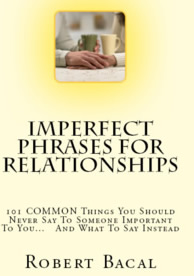
Stop Harming Your Relationship With Your "Big Mouth"
101 phrases you should never use with someone you care about, and what to say instead. Click the image to learn more from the Amazon page.
Available In
Improving Conflict and Communication Skills
Newest Conflict Help Articles
Learn To CUT DOWN Conflicts At Work
Improve work relationships by reducing conflict and using cooperative communication techniques

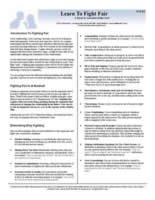
All Couples Should Learn To FIght Fair. Here's How
Check out our mini-guide on how to fight fair, and stop letting badly handled conflict cause pain in your relationships. Download it NOW!
Search Our Network Of Business and Personal Development Sites
Congruent Communication and Anger Management - The Connection
Anger Management: Are You Able To Say Both Yes! And No! ? By Charlie Badenhop
Summary: Some important tips on how being incongruent in communicating can both cause and fire extreme arguments and conflict.
I hear from many people that they see ever increasing expressions of anger in their everyday life. Understanding the process of anger is an important topic for all of us to take a closer look at.
If you take the time to delve deeper into your own anger, or resentment, you will often find that you are seriously limiting your ability to feel and express the full range of your emotions. In the process of limiting yourself, you become the victim of your emotions. You might be angry because you feel that someone else should be punished, but in the long run your anger will wind up punishing yourself. You might wind up resenting the way you are treated by others, but if you take a look you will usually find that your resentment limits your ability to feel happy in a more general sense.
If you feel stuck in a situation where you can only say "Yes" then your response will not come from your heart, and your response will not be supported by the emotions your body generates. When you feel unable to say "No" then you will likely find that no matter what you say verbally, "No" becomes the default response you want to give to others. You will likely find yourself even more frustrated as you understand on an emotional level that you are never sharing your true feelings. When you are able to speak the truth of both your "Yes" and "No" in a calm manner, you will find that you experience a sense of emotional freedom and well-being.
When it is all said and done, when we delve deeply into our emotions, we almost always find that our strongest and most habitual response is covering up other feelings that we are not fully aware of. We feel hurt, disrespected, abandoned, or sad, and we cover over these feelings and lose touch with them, by expressing anger or resentment instead.
When we find ways to tap into our deeper emotions we invariably find that we have been neglecting some form of pain or discomfort. When we neglect or simply don't notice our deeper emotional reactions, we lose the ability to express our full range of emotions. In the process we find that by consistently expressing only one segment of our entire emotional range, we limit our ability to be happy and feel at ease within ourselves and with those that we interact with.
It is important to remember that our emotions emanate from the body. When you are feeling angry, your body generates a specific set of reactions that inform your rational mind of your emotional experience. When you are feeling respected or loved your body generates a very different set of reactions. With Seishindo and other disciplines you can explore the process of how your body generates your emotional state and you can come to understand how at times you say one thing with your body and something rather different with your words. You can come to understand how you wind up confusing yourself when you say one thing with your heart and another with your logical mind. If you do wind up confusing yourself on a regular basis, you will find that your overall health and vitality suffer in the process.
Only when you feel like you have the right to say "No" can you truly engage your heart in saying "Yes." Only when your body and your rational mind communicate the same message in a congruent manner, will you find yourself feeling empowered and at ease. Take the time to gently explore your feelings and you will find that your emotional well-being resides deep inside yourself, waiting to be touched and acknowledged.
Charlie Badenhop is the originator of Seishindo, an Aikido instructor, NLP trainer, and Ericksonian Hypnotherapist. Benefit from a new self-help Practice every two weeks, by subscribing to his complimentary newsletter "Pure heart, simple mind" at http://www.seishindo.org/anger/index.html
Article Source: http://EzineArticles.com/