 Manage Conflict - Resolve Conflict - Prevent Conflict
 Menu
- Our Conflict Management Tools
- FREE: A Brief Conflict-Provoking Communication Self-Assessment
- Conflict Articles By Bacal
- Mega Conflict Management Library
- Guest Contributions - Conflict Management and Conflict Resolution
- Free Instructional Videos On Conflict
- Browse Our Conflict Related Mni-Guides
Stop Harming Your Relationship With Your "Big Mouth"
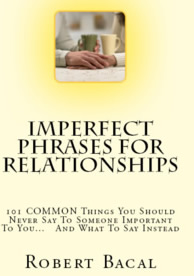
101 phrases you should never use with someone you care about, and what to say instead. Click the image to learn more from the Amazon page.
Available In
Improving Conflict and Communication Skills
Newest Conflict Help Articles
Learn To CUT DOWN Conflicts At Work
Improve work relationships by reducing conflict and using cooperative communication techniques

All Couples Should Learn To FIght Fair. Here's How
Check out our mini-guide on how to fight fair, and stop letting badly handled conflict cause pain in your relationships. Download it NOW!
Search Our Network Of Business and Personal Development Sites
Reduce Conflict In Your Life
Eleven Things That Create Resistance And Anger In Others (Free Excerpts)
Summary: By eliminating these eleven anger provoking behaviors from your repertoire you can significantly reduce the amount of conflict you are involved in.
The way you communicate is the primary determinant of whether the person you are interacting with will listen and think about what you say, be indifferent to it, OR, fight like heck against it. We've made a list of the most common, and detrimental ways of communicating that usually completely block the communication process.
Needless
to say, if you want to reduce arguments, and have
your position heard and considered, whether at home
or at work, these approaches should be avoided.
People tend to resist communication, argue, or perceive conflict when the other person:
• Provides unsolicited advice
• Appears to be trying to create guilt in another
• Offers reassurances that are hollow or not based on reality
• Communicates using "gloss it over" positive thinking
• Offers sympathy that seems false or lacking in understanding
• Pressures a person to change (opinion, position or as a person)
• Appears to want to blame rather than fix
• Clearly wants to "win" by proving someone wrong
• Comes across as infallible (in their own mind)
• Uses excessive dramatic language and histrionics
• Uses certain kinds of "hot words", words and phrases that have a heavy emotional connotation.
This excerpt is from Conflict Prevention In The Workplace - Cooperative Communication, published by Bacal & Associates. It is only available directly from us.